
1. Never assume anything is just ketchup
2. Speaking Spanish is definitely useful, Whether you're fluent, or just know the basics, it will come in handy
3. The human body can produce an unholy amount of sweat
4. Fewer things are more exciting than standing up on your surfboard and riding a wave for the first time
5. Machismo culture needs to die, like, yesterday. I was close to throttling the next person who made suggestive hissing sounds at me while seductively wiggling his eyebrows (sidenote: does this ever work?)
6. The thunder and lightning storms look like CGI effects
7. The sun rises and sets early, making it hard to break out of an awkward, up-at-dawn, in-bed-by-eight routine
8. The worst stories I heard about Central America prior to coming were told to me by people who had never been to Central America
9. Mordor references are always appropriate when looking into a volcano and seeing lava
10. Taxi drivers proposing? Yes
11. Learning about the history (both ancient and fairly recent) of a country is important, and I would even say mandatory, in order to understand how and why a place is like it is today. You may even spot some similarities to your own seemingly different country!
12. The bus system is often more reliable than the one at home in Vancouver
13. Rock that sexy flip-flop tan with pride, friend!
14. When you are hiking an extremely steep hill in one thousand percent humidity, it is okay to admit to yourself that you've maybe made a mistake
15. Befriending the beach dogs is necessary
16. The same six songs seem to be incredibly popular all over the country, as I couldn't escape them anywhere. I don't particularly like any of these songs, but will still be downloading all of them when I'm back. For memory's sake
17. If you have the opportunity to do laundry...do it!
18. There is nothing like watching a sunset on a mostly empty beach, with a beach dog-friend by your side
19. You will leave your heart in Nicaragua. You will. It just happens.
Questions? Comments? Criticisms? I'd love to hear them all!
the-wanderingjew@hotmail.com
Tuesday, September 29, 2015

Surfing in San Juan del Sur (or, What I Actually Came Here to Do)
It's always so bittersweet to me, writing the final blog of a trip. On one hand, it means acknowledging that the trip is almost over, and before I know it, I'll be heading back to reality: work, scheduled days, fast-approaching winter, and virtually no gallo pinto. On the other hand, it means I get to reflect back on the last month, and re-live all of the incredible things I've been so, so lucky to do and see. Like I said, mixed feelings all around.
But first! The pinnacle part of my trip! The surfing! The very reason I first thought to myself, "Hm, I should go to Central America!" After my inaugueral surfing experience in South Africa, I moved back to landlocked Calgary, where surfing just...isn't a thing. But ever since the first, exhilirating time I stood on a surfboard, I knew I would be back. Hence why I saved the last full week of my trip to spend in San Juan del Sur, mastering the waves.
San Juan del Sur is a small beach town south of Granada. It's definitely a tourist town, as most of the people I saw there were foreign, and even most of the locals I met were involved in the tourism industry. There isn't much to do in the town itself, besides shopping and visiting the different restaurants and bars through the centre of town, and on the beachfront. I definitely explored the "downtown" in the evenings, and met tons of awesome, fun fellow travellers. During the days, however, I was there to surf.
I stated at Hostal Casa Oro, which had been recommended to me prior to arriving. It didn't disappoint. They offered shuttle service to the beaches, surfboard rentals, FREE BREAKFAST, and was the perfect balance between being social without feeling like a nightmarish, never-ending frat party.
The first beach I went to (the day after I arrived) was Playa Hermosa. It was a stunning, long beach, with rocks way out in the distance, completely living up to its name (hermosa means beautiful). The waves were high enough to stand up on my board, but not so threatening that I felt like I was going to be pulled out into the middle of the ocean. I had success standing up right away. I also rented the best board here. It was a good start, and I feel like I really improved just in a day here.
The next several days, I went to Playa Maderas. It was cheaper and quicker to get to from the hostel, and I had heard that this was one of the easiest beaches to learn on. I personally preferred Playa Hermosa, but that could very well depend on the waves that day. I found the waves at Maderas to be a little bit harsher, and since this was a more popular beach, I was often worried that I was going to hit a swimmer or another surfer. In the afternoons it quieted down a bit, and I really enjoyed surfing here as well. But I wish I had gone back to Playa Hermosa at least once more. There are tons more beaches around San Juan del Sur that I didn't make it to at all, which just means I'll have to come back.
It feels redundant to go on and on about how I just surfed for nearly a week, so I won't. But I will say that I completely fell in love with it. Standing up - really standing up - on a surfboard is one of the most exhilirating things I've ever experienced. After surfing for the better part of a week, my arms and shoulders were basically toast, and I had a pattern of bruises all over my body that I'm sure I could connect-the-dots into something resembling art if I really tried. It was completely worth it, and I'm already looking forward to the next time I'm on a surfboard. Tofino, I'm comin' for ya!
Now I'm sitting in Granada, enjoying coffee, hammocks, shade, and avoiding venturing too far from the hostel (the catcalling, hissing, indescribable suckings sounds, and balding men calling me "Deliciosa" and "Mami" in the streets gets SO OLD, you guys!) I plan to take the day to look through my pictures, read, blog and not think about my trip ending!
Questions? Comments? Criticisms? I'd love to hear them all!
the-wanderingjew@hotmail.com
Friday, September 25, 2015
Uphill from Here: Isla de Ometepe
Sorry for the delay between blogs, friends. I´ve been (literally and figuratively) attached to my surfboard for the better part of a week.
Let me back up just a little bit: after Granada, the next stop on my trip was Isla de Ometepe, an island consiting of twin volcanic peaks, in the middle of Lake Nicaragua. I had Googled pictures of the island before leaving on my trip, and needless to say, it was one of the things I was looking forward to the most. It did not disappoint, providing some of the most incredible scenery of the entire trip.
It´s fairly easy to get to Ometepe from Granada. I took a bus to the town of San Jorge, and from there, took the ferry across the lake. Although it was by no means a trecherous ride like the lancha to Little Corn Island, the water was surprisingly choppy. Still, the ferry was nice and slow, and the view of the island approaching was a lovely distraction.
Getting around once you get to Ometepe is a little bit more complicated, as I learned. Since there were several people on the ferry looking to be dropped off at various guesthouses and hostels on the island, I was able to take a shuttle for a reasonable rate to my hostel, but I learned that the buses run few and far between, are often slow and cramped, and the schedule was inconsistent. The best way to get around the island is to rent a bicycle or motorbike. I discovered the perils of the bus on my way off the island, standing wedged between people, chugging up the steep hills. My arm kept bumping the immaculate hair of the man next to me (due to lack of room, and lurching movements!) He was none too pleased. I´m sorry, guy.
I had heard from fellow travellers that El Finca Zopilote, a working organic farm, was a great place to stay on the island. This was where I dropped off. I was not disappointed. The farm was rustic but comfortable, offering organic food grown right there, as well as products such as homemade Nutella, coconut oil and soaps for sale. It was a surprisingly long uphill trek from the main road (okay, five minutes, but this seems like a lot with a heavy backpack in the heat!) I enjoyed staying at Zopilote. It was a beautiful area, lush, comfortable, with birds and the occasional monkey lounging in the trees, and the food was awesome. Really, that is about all I need. As a bonus, they have an amazing mirador (lookout) that you can climb, and see incredible views of the sun setting over Volcan Concepcion in the distance.
The day after arriving on Ometepe, I decided to hike Volcan Maderas. The two volcanoes on the island are both hike-able. Concepcion, the active volcano, is known as a gruelling, masochistic, twelve-hour trek, and I wasn´t sure I was up to that one. Maderas, the smaller of the two, was advertised as an eight hour hike. I assumed that as an experienced hiker, with a guide to show me the way, this was totally do-able. As I can now attest...it was. But I can quite confidently say that it was the most difficult hike I have ever done. I didn´t think I could possibly reach the point of saying this, but it made Table Mountain feel like a nice, chill stroll. The entire hike (eight hours is NOT an estimate, people!) is incredibly steep. Most of the way up involves big steps, which may be slightly easier if you happen to be on the tall side, but I have the leg-to-body ratio of a corgi, and found this incredibly difficult. In addition, because Maderas is in a cloud forest, the trail is muddy, slippery, and you are often dodging large rocks, making the footing sketchy at best. There are no breaks from the steep climb, and I know for a fact that I have never produced as much sweat as I did on the hike. It was...amazing. After three and a half to four hours, you finally reach the top. Depending on the day, you may have beautiful views from the top...or complete cloud cover. I hiked on a cloud cover day. However, there is a lagoon at the top, and the water is chilly! The highlight was putting my feet in after hiking.
The hike down was also brutal, only this time, it was my joints taking a beating, not my cardiovascular system. I found that I was looking at my feet most of the time, as falling and rolling an ankle seemed like a very high possibility. It has now been over a week since the hike, and I´m able to say that I´m glad I did it. At the time though, I´ll admit it: it was the worst! Protip: bring as much water as you can carry! The level of fluid loss is astounding.
The next day, my muscles were incredibly stiff, so naturally, I rented a bike, and rode aroud most of the (rocky! Hilly! Difficult!) Maderas side of the island. The bike I rented had no brakes, no gears...and helmets aren´t a thing on Ometepe. The roads were very up-and-down, and I often had to get off the bike and walk up the hills, as the lack of gears was not working in my favour. The downhills involved speeding over rocks and potholes, and basically hoping that I wouldn´t hit anything at a bad angle. As well as the bike ride, I also walked to a waterfall on the other side of Maderas. I was told that this was an easy 3km walk, and that it was do-able in flip flops. While it turned out to be, I would say that it is definitely longer than 3km! Not to mention another horribly steep walk...but at least the footing was more solid than the day before. The waterfall was definitely worth it. The water was cold and refreshing, and it cascaded down a huge rock face. There were lush green plants and mangroves all around....here was my Central American jungle, friends!
On my last day on Ometepe, I kayaked in Lake Nicaragua. I was hoping to catch a glimpse of one of the mythical bull sharks who supposedly live in the lake. No such luck, burt I did see a few turtles, and lots of birds. While it was hot and humid, the kayaking over relatively calm waters was a nice change from the extreme hill-walking from the past two days. I would definitely recommend renting a kayak during a trip to Ometepe!
I technically did spend one final day on Ometepe, but this consisted mostly of drinking coffee, lying in a hammock and reading. Nothing to see here.
My conclusion: Ometepe is uphill everywhere you go, hot, spaced out (making getting around a real effort), and consistently 1000% humidity. Would I go back? In a second.
Questions? Comments? Criticisms? I´d love to hear them all!
the-wanderingjew@hotmail.com
Wednesday, September 16, 2015
Granada: A Love Story
It's hard to believe that I've been in Granada for almost four days. On one hand, it feels like I just got here, and am nowhere ready to leave. On the other hand, I feel like I've been here forever, but could stay a lot longer. It's a lively, beautiful city, with lots of amazing day-trips, incredible architecture, food options for days, and as an added bonus, this is where I've met the most backpackers. As a solo traveller, this is important!
My time in Granada started early, as Monday was (unbeknownst to me) a holiday, and I wanted to be sure to catch a bus before any madness started. As it turns out, I didn't need to worry, as buses were up and running, and despite it being Independence Day, this really had no effect on getting to and from places, or accessing different businesses (in my experience, anyway). My initial impression of Granada was that it was an impressive, stunning colonial city, with a frenetic energy, and heat like I haven't experienced yet. Immediately after getting off of the bus, I felt a little bit swarmed by vendors, taxi drivers, and others who saw the glowing ""Lost traveller!!!" sign that seems to be above my head at all times. I stumbled across my hostel completely by accident, but it has ended up being one of the best choices I've made. I was thrilled beyond belief to see people hanging out in the hammocks, or chatting in the large communal areas. Since Masaya had been a largely solo mission, it was nice to be among others. The hostel also includes breakfast, a pool (for when the heat gets painful), and an amazing central location, making it quick, easy and safe to get around. Hostel Oasis, friends. If you ever find yourself in Granada.
Immediately after I checked in, I was informed that they were fumigating the rooms, and everyone was required to leave by 11:30am. I won't lie, this freaked me out, until I learned that this was just a routine thing they did every three months. This seemed like a good call to me. This was also a blessing in disguise, as having to head out encouraged me to meet some rad girls from England and New Zealand, and do a day-trip to Las Isletas in Lake Nicaragua. I had assumed that the isletas were a group of small, uninhibited islands. However, as I learned on the two hour boat tour (I know...), they are a group of tiny little islands, formed naturally by an eruption from nearby Volcan Mombacho, and now, owned by wealthy families from Nicaragua, Europe and North America. It's...interesting sitting in a boat, and marvelling at the multi-million dollar homes, some complete with heli-pads, situated in the middle of the huge lake. It was nice to be out on the water for the day, and definitely interesting to see the kind of homes money can buy, but Las Isletas were different than what I had expected. It's a nice day tour, and seems to be a must-do in Granada, but to be honest, I don't know if I would be devastated if I had missed them.
The next day, however, was worth it all. We decided that as a group, we wanted to hike Volcan Mombacho. Originally, we had hoped to hike all the way, but decided that this may be a nightmare in the heat. We ended up getting transport to the base of the volcano, and riding up in a huge, rambling truck that, quite honestly, I was worried may not make it up the steep, narrow, winding road. I was set to get out and push, but thankfully, it didn't come to that.
Halfway to the top, we stopped at a small organic coffee farm, and learned about the process of harvesting, roasting, and producing coffee. While I'm definitely not a connoisseur by any means, I'm an avid coffee drinker, and liked seeing the process. They also sell coffee beans at the farm (shocker!) While I know the prices are massively inflated due to tourism, this did not stop me from purchasing a pretty thorough selection of beans. Vancouver friends, you're welcome.
The hike itself was an hour and a half walk around the crater of Mombacho. Since it's fairly high up, and immersed in a cloud forest, it was wonderfully cool and breezy, and I almost thought it might rain. The number of lookouts along the trail provided unreal views of Granada, Lakes Nicaragua and Managua, and the other volcanoes (including smoking Masaya) in the distance. While I took some pretty awesome (if I do say so myself) panorama shots, it really didn't do it justice. I would go so far to say that you can't leave Granada until you hike Mombacho. It's standing out as a trip highlight for me, and I can't imagine missing it.
Day three in Granada, myself and several others from my crew decided to head to the Chocolate Museum, and take a class, which involves learning about where cacao comes from, and then picking, roasting, crushing, and mixing your own beans to make three different chocolate-y drinks (with different spices), and your own chocolate bars, where you can add anything you want, such as sea salt, chilies, nuts, or raisins. To anyone in Nicaragua: do it. Seriously. This was the best. Ismael, our leader, walked us through the process, got us stoked about the process with ridiculous chanting (that we were pretty keen on joining), and cheered us on as we exhausted ourselves crushing the beans into paste. This was one of the most fun things I've done on the trip, and the end result was nothing but success. As an added bonus, there is air conditioning!
I spent the evening of my last day walking around the city, just taking in the sights, and playing tourist, whipping out my camera at any given opportunity. While I find that the machismo (read: men hissing vulgar comments and catcalls as you try to make your way down the street) culture is slightly more present in Granada than it was in Leon, I still felt quite safe overall. I have found that walking with purpose, and keeping my face set in a Nurse Ratched-esque scowl when these guys approach keeps them at bay for the most part.
To sum up my time in Granada: Hiking. Food. Lounging in the pool. Heat. Chocolate. Friends. Hammocks. Coffee. Frequent stopping and staring. Love.
Questions? Comments? Criticisms? I'd love to hear them all!
the-wanderingjew@hotmail.com
Sunday, September 13, 2015
Hiking Volcanoes, Aimless Wandering, and Gratuitous Spending
After my difficult decision forego my trip to Pearl Lagoon (this time!), I made a tentative plan to head back to the Pacific side of the contry, starting in Masaya, and seeing where I would end up at the end of my trip. Most of what I had hear about Masaya was that while some of the surrounding areas were worth a go, the city itself was nothing special, and could be done in a day trip from either Granada or Managua. Nevertheless, I decided to crash here for a few days, to see the sights and get my bearings. I hate to say it, but I was expecting a rather dumpy, boring town with nothing going for it.
Luckily, my expectations have been exceeded. While Masaya isn't quite the gem that, say, Leon is, it's nicer than I was expecting. The main draw to Masaya is shopping, both in mini-malls, and markets, and as a result, the city has a very modern, buzzing feel to it. There's a lovely parque central with outdoor restaurants and smoothie stands, and I have had some of the best meals of my trip here.
My main reason for passing through Masaya, however, was to visit Parque Nacional Volcan Masaya.
Home to several volcanoes and craters, Volcan Masaya is definitely worth a visit. The main volcano is still very much active. It has erupted many times over history, the most recent being in 2012. Back when the Spanish were settling what is now Masaya, they feared the volcano, naming it La Boca del Inferno (the mouth of hell), and they even planted a cross at the top to ward off the Devil.
Before I arrived, I had read about visiting the volcano, which is constantly smoking away. I had even heard that on occasion, people have seen the liquid hot "magma" (sorry) boiling way down inside the volcano. This was a done deal for me. I paid $30 (pretty standard pricing, as I found out) for a guide to take me on a night hike (which runs from 4:30-7:30 because it gets dark so early here). I was all for the cooler temperatures, greater chances of seeing some sort of boiling lava phenomenon in the dark, and bat cave excursion, which was included.
It is possible to hike all of the way up to the volcano, but we took the slightly easier way: we hitched a ride with the park rangers (in the back of their pickup - sorry mom!), and then hiked to the top from the spot they dropped us off. The smoking volcano is quite something. There is a heavy stream of sulphur-y smoke, and I could immediately feel it in the back of my throat. It's recommended to only stay for a maximum of five minutes, as the smoke can really take a toll on your lungs. Duly noted.
The rest of the hike in the setting sun was pretty spectacular. I saw the different craters, and all of the massive black rocks from previous eruptions, covering a gigantic area of the mountain, stopping just short of the highway (I can't imagine how terrifying it would be to see it in action!)
Once it grew dark, we walked into a deceivingly deep cave. Before enterring, my guide warned me that there were bats - but not the vampire kind! Just little Stellaluna fruit bats. He made me promise I wouldn't cry. I confidently told him I was 90% sure I wouldn't. It was pretty surreal to stand in a pitch-dark cave with only a feeble flashlight, learning about how the Indigenous people had believed that a witch inhabited the cave, and therefore, virgins and children were once sacrificed there, as bats zoomed by, missing my head by mere inches. (FYI: still didn't cry)
But the best part? Leaning against a sketchy, falling-down railing at the lip of Volcan Masaya, looking way, way down, and spotting the unmistakeable glow of lava, boiling inside the volcano. It was a surreal experience, an amazing sight, and worth the strange looks I got when I made a Mordor reference.
The next day, I took another day trip to the Pueblos Blancos, or White Villages, named for the whitewash originally used on the buildings. Each village specializes in a certain artisan tradition (such as flowers, woodworking, ceramics, hammocks, and so on). Although there are about eight villages in total, I only visited a few. While I appreciated the handicrafts, smaller towns and houses, and apparent pre-Columbian influence, I think my expectations may have been a bit high (or I was in the wrong parts of the pueblas to really see the amazing stuff - this is entirely possible!) There is a beautiful walk around Lake Apoyo, and honestly, I would recommend it as a day trip, as it is interesting to have a look at the different handicrafts. Maybe just look more into it, and it will be more worth your while, rather than just hopping on a bus, like I did.
My last day in Masaya was reserved for checking out the markets. I had heard about the famous Artisan Market, and this was originally where I planned to go. However, my guide from the volcano hike tipped me off that this market was very tourist-centred, and therefore, more expensive. He mentioned that the Mercado Municipal Ernesto Fernandez is a better place to go - you're able to buy the same sort of items, but for way less. So that's what I did. I was expecting to be hassled by the vendors, but I was pleasently surprised that while they will approach you, they are no way in your face, and are content if you tell them you're just looking. Generally, bartering isn't a big part of the shopping experience in Nicaragua, but you can usually negociate here and there. The market is housed in a rather dark, run down building, but it felt very safe, not overcrowded in the least, and overall, was a much more interesting experience. Apart from handicrafts and souvenirs, here you can also purchase fruits and veggies, handmade shoes, dog food (!), bizarre-looking pinatas, and so on. (I did have one bad moment where I full-on dry heaved when the scent of some raw beef wafted my way. I'm sorry everyone!)
After the Mercado Municipal, I checked out the Mercado Artesanias, just for comparison. This is definitely the cleaner, more open and organized market, with open stalls, and organized displays. However, lo and behold, the items were basically identical, and I was glad that I had visited the other market first. It's worth a go, but pro-tip: always go to the local market when you want to spend money! It was safe and inexpensive...what more do you want really?
A quick shout-out to Nelson from Samaritan Tours: when I first arrived in Masaya, he approached me right away. Being the rather cynical traveller that I am, I assumed that there was going to be a catch of some sort. I'm happy to say that I was wrong. Not only did he give me directions to my hostel, tips about the markets, and a fantastic hike up Volcan Masaya, but he was incredibly genuine, knowledgeable, and liked my jokes and movie references. Would recommend!
Questions? Comments? Criticisms? I'd love to hear them all!
the-wanderingjew@hotmail.com
Saturday, September 12, 2015
The Corn Islands: How I Nearly Chose to Never Leave the Island
When I first started thinking about Nicaragua, I stumbled upon another travel blog where the writer had been to the Corn Islands. From their pictures and description, it basically became a done deal then and there. The Corn Islands bring to life every Caribbean Island dream you have ever had, and it was one of the hardest places I've ever had to leave.
Although buses do make the trek from Managua to Bluefields (on the Caribbean side), and a boat is available to the Islands, I had heard that it's a bit of a gruelling trip, and can take from 24 to 50 hours. Yikes! Since I'm in a bit of a time crunch (and I'm not quite that much of a masochist!), I decided to fly from Managua to Great Corn Island. The flight is $120 round trip, and while this is a bit more expensive than I would have liked, the amount of time it saved was probably worth it. We took a tiny little plane from the Managua airport. Although it was a clear day, there were some bumps upon the takeoff and landing that freaked me right out, but I managed to maintain my cool, as nobody else seemed to notice. (I didn't used to be a nervous flyer! Is this an age thing? Someone explain!)
I only stayed one night on Great Corn Island. It was an amazing place, with colourful houses, brown-sugar beaches, coconut palm trees and a mangrove swamp. I spent my day on Great Corn wandering around and marvelling at the sights. I've seen plenty of beaches on those "Wish you were here!" postcards, but this was the closest I had come to seeing one with my own eyes.
Since I found that there wasn't as much to do on Great Corn (without, say, a pre-booked diving package or something), I decided to take the boat to Little Corn the next day. The transport from island to island is on a panga (small motorboat), that I had read could get quite rough. I popped a couple of Gravol before, but the ride over wasn't a problem. I had heard that the front of the boat is more up-and-down, and the back is where you're more likely to get soaked. My plan was to find a nice spot in the middle, but sadly, it was busy, and I ended up in the very back. As I can now attest, you do indeed get soaked. My stomach did not bother me, but it took three days for my shirt to properly dry out. It's a bit of a deal with the devil, really. However, I was overall happy that it had been a relatively smooth ride.
Arrving on Little Corn is literally arriving in paradise. The entire island is about 1.5 square km, and the population is about 500 people. There are no motorized vehicles allowed. It was perfect. Since the island is so small, you start to recognize everyone, giving it a friendly, communal vibe. This was also where I found the greatest concentration of backpackers since I arrived in Nicaragua. After having some very solitary days, it was nice to make some friends!
The majority of my time on Little Corn was spent blissed-out, wandering all around the island, exploring the white-sand beaches, marvelling at the colour of the water, and indulging in island life. I had only planned to stay for two days, but ended up there for four, and could have easily extended that even longer.
One of the main highlights of Little Corn was snorkelling in the Caribbean. The water was crystal clear, and I was able to see intricate reefs, brightly coloured fish, and even a few turtles, an eagle ray, and (my personal favourite) sharks! The sharks here are nurse sharks, and they were more like big, lazy dogs. They're nowhere near the size of the Great Whites I saw in South Africa. Even without the safety of the cage, they kept to themselves. I was hoping to see a hammerhead, but no such luck this time.
On the third day on Little Corn, there was a massive tropical storm, the likes of which I had never seen (except in movies). I have never before seen the wind blow a full ketchup bottle off of the neighbouring table, smashing it to the ground inches away from my foot. It was unbelievable. Most people huddled down in restaurants and cafes and spent the day reading, watching people pull their boats to the safety of land, marvelling at the velocity of the wind and rain, and secretly hoping that it would let up, as many of us had plans to leave the next day, and it makes me shudder to think of taking the panga in the near-hurricane weather.
Luckily, it was a one-day storm, and the weather was calm again for my early boat ride back to Big Corn. As a matter of fact, the boat back was even smoother and easier. My original plan was to head to Pearl Lagoon for a few days, and then back to the Pacific side. Although I had been warned that it wasn't too safe to go there alone as a female traveller, I had met two German girls on Little Corn who were planning to do the same trip, and we decided to do it together. However, after more research, it looked like it wasn't an easy place to get to and from, especilly with our respective time issues, and we decided not to go. I'm disappointed that I wasn't able to see it, but I feel that ultimately, I've made the best choice. I guess I'll just need to come back one day.
I'm now in Masaya, home of active volcano hikes, handicraft markets, and general liveliness. Afterwards it's south, to Granada. I'm at about the halfway mark of my trip, and I don't want to think about it!
Questions? Comments? Criticisms? I'd love to hear them all!
the-wanderingjew@hotmail.com
Leon Viejo, and Surfing on an Empty Beach
It's been a while! For the last week and a bit, I've been on the go (or, more accurately, thoroughly enjoying island living, with no computer access, no cars, no shoes, and no worries).
But let me back up a bit! After I last wrote, I decided to spend another day in Leon. Since I had seen most of the city, I decided to go on a half-day trip to Leon Viejo, which is about an hour bus ride out of the city. It includes the ruins of the original city of Leon, which was destroyed by the eruption of Volcan Momotombo in the early 1600s.
I wasn't one hundred percent sure where I needed to go to get to the site, and got onto a "Chicken Bus" (a brightly painted schoolbus, which is one of the main modes of transport in Nicaragua!) out of Leon. As it turns out, the transport, while a bit frenetic at bus stations, is actually quite efficient. I got off the bus in La Paz Central, hopped on another bus to Puerto Momotombo, and was good to go! The bus stops less than 1km away from the site, and the clearly marked signs make it an easy, if not hot and dusty, walk. I highly recommend the trip for the scenery alone. Not only was the bus ride absolutely stunning, but the walk through the tiny village was beautiful, and it was pretty cool to see older homes, chickens and dogs running free in the dirt streets, and kids biking around without a care in the world. It was definitely a nice change from the big city!
If you head to the ruins of Leon Viejo, definitely don't expect it to be a Dr. Jones-esque saga. Most of the ruins are about 1 meter high walls, and signs marking which parts of the city they would have been. It's a bit of a stretch of the imagination to picture a thriving city here. The best part is walking up a small hill near the end of the ruins and having a phenomenal view of Volcan Momotombo, and Lake Managua. As an added bonus, because it is low season, I was able to explore at my lesure, as opposed to battling tour groups just to have a quick look at the signs.
The history of the area was pretty interesting. There is a small museum on the site portraying Indigenous life, and another showing how life changed post-Columbus. When the Spanish colonizers took over Nicaragua, they built their homes, governmental houses and churches over the Indigenous land. They ran Leon (then the capital of Nicaragua) with a cruel fist, including the practice of setting wild dogs on the Indigenous people in the town square (as entertainment?) This is why it is believed that at least some divine intervention played a part in the massive eruption, which caused the Spaniards to flee, and settle what is present-day Leon. Although Leon Viejo isn't the most exhilirating activity in the area (volcano boarding, anyone?), if you fancy a nice half-day trip, and a beautiful drive, it's worth a go.
After Leon, I just couldn't wait any longer. I took a bus to Las Penitas (near Leon) to get my surf on! I hadn't been on a surfboard since South Africa, which was four years ago. But my fingers were crossed that it would be just like riding a bike. Let's just say it took me a while, but at the end of day one, I was standing up! The waves in Las Penitas were fairly small, and good for beginners, but the occasional cross-tides can make it a bit of a bumpy start. I'm glad I came, as it was a stunning beach, sunsets that words cannot describe, and I was really the only one around, so nobody could see my struggle on the surfboard. I also met Ryan, a wonderfully eccentric local, originally from Winnipeg. He pointed out good areas to eat, cool things to see, and helped me figure out my journey from Leon across to the Caribbean side of the country. Since I was really the only person around, it was awesome to meet someone who knew the area, and gave me a fun place to hang out and write when my arms couldn't paddle in the waves anymore. Hat's off!
The only downside in Las Penitas was that my room was right next to the road. While it wasn't too busy, when the buses started rolling by early (like 5:30am early), they would honk their horn to let the people know of their arrival. This would unfailingly wake me up every time. Also, I say "honk their horn", but it was less of a regular car horn and more of a terrifying, heart-stopping, "Elizabeth, I'm coming to join you!" scream. Anyways. Apart from that, Las Penitas gets a glowing review. While it was quiet during my trip, it is clear that in high season, it's bumping.
Alas, all good things must come to an end. After three days conquering the waves, it was time to move on. The next move was to head back to Managua, and fly to the Corn Islands. Based on word of mouth, and excessive searching of Google Images, this was the island paradise I had been waiting for!
Questions? Comments? Criticisms? I'd love to hear them all!
the-wanderingjew@hotmail.com
Wednesday, September 2, 2015
The First Two Sweltering Days of Nicaragua
It's so hot I can't think straight. I'm in Leon, which I've been told is the hottest part of the country, and while I'm minutes away from drowning in my own sweat, locals are casually strolling about in sweaters and jeans. It is, frankly, kind of amazing.
My trip to Nicaragua was somewhat of an impulse decision that I decided to run with. It has been in the back of my mind for a while, but I was always coming up with reasons why the timing just wasn't right. A few months ago, I finally decided to just GO already. Two days in, and it has already been one of the best decisions ever.
I started off by flying into Managua, which is a sweaty, frenetic shambles that I still found strangely appealing for the short time I was there. When I was seventeen, I travelled to Ecuador. I was floored by the traffic, the noise, the run-down buildings contrasted with beautiful colonial churches, bikes and motorcycles carrying entire families, and lush town squares. It was love at first sight, and this introduction to a chaos like nothing I had ever seen before always sticks out as my first travel experience that I have been trying to chase ever since. To me, Managua on fist sight was as close as I've been.
That being said, I didn't spend a very long time in Managua. After roughly eighteen hours of planes and airports, I staggered into my hostel, and crashed. In the morning, I walked to the UCA bus station, past graffiti, murals, utter chaos, and more than one person leaning out the open door of a speeding bus to shout to me on the sidewalk. (Were they offering helpful directions? Yes, let's go with that). The UCA terminal is more or less a large, dirt parking lot, but with drivers immediately running at you and shouting "Leon?" it's pretty efficient to find your ride.
Since I had been told time and time again that there wasn't really much to see in Managua that I couldn't find elsewhere, I didn't waste much time heading to Leon. The bus was a quick hour and a half ride, that cost me roughly $2. I was immediately lulled to sleep by the surprisingly smooth ride, and the lovely, lovely air conditioning. However, as I got out of the bus at the station in Leon, I was nearly knocked on my arse by the heavy, humid, weigh-you-down heat. My first thought?
"I'm going to need to shave my head." Yup, it was hot.
The walk to the hostel was heavy and hot, and it's probably not even fair to call it a walk, as it was more of a drag. However, the cobbled streets, old colonial buildings, and the colours were stunning, reminding my of Old Quito. This was what I had been waiting for! The city is cleaner, and more laid-back than Managua. I had been bracing myself for hawkers and catcalling galore, but it just...hasn't really happened. I've had the occasional older gentleman on a bicycle make hissing noises that I couldn't repeat if I tried, but overall, it is very non-threatening, and I feel completely safe wandering the streets.
Today, I visited the Mercado Central (all of the fruits and veggies you could ever dream of!), and the Catedral de Leon. The Cathedral is the biggest in Central America, and recommended as a must-see. The best part is being able to climb onto the roof and see the whole city, and the outlines of the volcanoes in the distance. I have somehow managed to climb onto several roofs of ancient churches in my travels, and this one was by far the best kept up, and the least terrifying.
After the Cathedral, on a whim, I decided to visit the Museum of Folklore and Legends. I'm not a big museum person, but this one was pretty cool. It's located in a building that served as a prison during the civil war (which, I hate to admit, I know next to nothing about. The plan is to learn more while I'm here!) The first part of the museum introduces the war, and the Guerillas who were imprisioned there. The methods of torture are outlined on the wall, which I wasn't expecting to see in a folklore museum. The contrast is interesting, particularly because most of the legends and stories are...pretty dark.
Most of the legends include witches, flesh-eating dogs, death, curses, a death-wagon that used to show up at street corners (which I'm pretty sure I've seen at least once when trying to cross the streets here), and just generally, utter mayhem. The part that I found most interesting was that most - if not all - of the legends stemmed from some of the first interactions between the Indigenous people and the Spaniards. I won't use this blog to rant about colonialism, but if you're interested, just email me.
The best part of the museum? Each legend has its own exhibit, complete with surprisingly eerie life-sized papier-mache models of the characters from the legends. Honestly, this is pretty cool, as I was hoping to never sleep again anyway. Unfortunately, pictures weren't allowed, or you better believe I would be sharing the discomfort with all of you! After the tour, you get a chance to climb some narrow, rickety stairs, and walk around the top border of the building. The views of the city are incredible. I would recommend the museum tour, as it is wonderfully creepy, and a good way to spend an hour or so!
Since uploading pictures from my camera is a bit of a painstaking task, even on my home computer, I likely won't have any visuals on the blog until I'm back in Canada. Rest assured, they will be worth it. Leon is photogenic.
Questions? Comments? Criticisms? I'd love to hear them all!
the-wanderingjew@hotmail.com
Tuesday, August 23, 2011
What I Learned in South Africa
1. Seeing ostriches out the window on your first day in the country will cause you to squeal like a little girl. On a crowded bus.
2. Watching farm dogs chase baboons never gets old. It's always funny.
3. Jews CAN build sheds!
4. When you have thick, curly hair and don't have the opportunity to wash it every day, you will eventually turn around, catch a glimpse of yourself in the mirror, and your first thought will be "What is the mother from Coal Miner's Daughter doing here?"
5. Don't go hiking in the rain with a Malarone tablet in your pocket. It will dissolve into yellow mush and get all over everything.
6. There is no shame in having "The Lion Sleeps Tonight" on repeat on your iPod.
7. When you become accustomed to having your own guava tree in the front yard, you go through withdrawal when you go back to the city.
8. Sharks are incredibly badass.
9. It is impossible for me to ride a bicycle without huge gale-force winds and uphills working against me. I did a fair bit of cycling this trip, always with killer headwinds. This doesn't just apply to South Africa. This has been the case since my first-ever bike ride.

10. In Cape Town - Long Street in particular - beggars will come up to you, always starting their pitch with, "I'm not a bad guy!" These people are the absolute, soul-sucking worst. They'll trail you for half a block, moaning about how they don't want money - just some coins or a R10 bill. Hmmm. My personal favourite was a man saying he wanted me to buy milk for his baby. Now, before you judge me too harshly, let me explain: there was no baby in sight. No baby, no money.
11. Despite what the media tells you, sometimes you have to see a country for yourself before making assumptions. I have been completely safe, never felt threatened, and have been treated in a kind, sisterly way by locals.
12. South African accents are drool-worthy.
13. You eat more, you see more.
14. When you spot a jackal, quoting Family Guy's "JACKAL! A jackal! Is it a jackal? It's a jackal!" is entirely appropriate.
15. Cape Town drivers are not great. Jo'burg drivers are worse.
16. If you happen to be female, random men might stop you on the street to ask if they can have your number to CALL YOU IN CANADA! They have proven harmless, but saying no and walking away is more than okay.
17. I can't tolerate Bruno Mars on any continent.
18. Bawling one's eyes out on the way to the airport marks the end of a fantastic trip.

Questions? Comments? Criticisms? I'd love to hear them all!
the-wanderingjew@hotmail.com
2. Watching farm dogs chase baboons never gets old. It's always funny.
3. Jews CAN build sheds!

4. When you have thick, curly hair and don't have the opportunity to wash it every day, you will eventually turn around, catch a glimpse of yourself in the mirror, and your first thought will be "What is the mother from Coal Miner's Daughter doing here?"
5. Don't go hiking in the rain with a Malarone tablet in your pocket. It will dissolve into yellow mush and get all over everything.
6. There is no shame in having "The Lion Sleeps Tonight" on repeat on your iPod.
7. When you become accustomed to having your own guava tree in the front yard, you go through withdrawal when you go back to the city.

8. Sharks are incredibly badass.
9. It is impossible for me to ride a bicycle without huge gale-force winds and uphills working against me. I did a fair bit of cycling this trip, always with killer headwinds. This doesn't just apply to South Africa. This has been the case since my first-ever bike ride.

10. In Cape Town - Long Street in particular - beggars will come up to you, always starting their pitch with, "I'm not a bad guy!" These people are the absolute, soul-sucking worst. They'll trail you for half a block, moaning about how they don't want money - just some coins or a R10 bill. Hmmm. My personal favourite was a man saying he wanted me to buy milk for his baby. Now, before you judge me too harshly, let me explain: there was no baby in sight. No baby, no money.
11. Despite what the media tells you, sometimes you have to see a country for yourself before making assumptions. I have been completely safe, never felt threatened, and have been treated in a kind, sisterly way by locals.
12. South African accents are drool-worthy.

13. You eat more, you see more.
14. When you spot a jackal, quoting Family Guy's "JACKAL! A jackal! Is it a jackal? It's a jackal!" is entirely appropriate.
15. Cape Town drivers are not great. Jo'burg drivers are worse.
16. If you happen to be female, random men might stop you on the street to ask if they can have your number to CALL YOU IN CANADA! They have proven harmless, but saying no and walking away is more than okay.
17. I can't tolerate Bruno Mars on any continent.
18. Bawling one's eyes out on the way to the airport marks the end of a fantastic trip.

Questions? Comments? Criticisms? I'd love to hear them all!
the-wanderingjew@hotmail.com
Four Out of Five Ain't Bad: Safari-ing in the Kruger

It's hard to imagine making a trip to Africa without partaking in some sort of safari. Ever since hearing my Grama's amazing stories of all the wildlife she saw both in South Africa and Zimbabwe, I knew that I couldn't miss out, and started doing my homework. I had heard amazing things about Kruger Park, and upon finding a five-day budget camping safari, I decided to sign up right away. Yes, it was a little on the expensive side, but keep in mind, that includes meals, transportation, tented accommodation, and of course, the experience of a lifetime. Giving myself the chance to spend almost a week in the Kruger, searching out the Big Five seemed like money well spent.
I booked my safari through a company called African Budget Safaris, who referred me to Livingstone Trails, which was the company who would actually take me to the Kruger.
I had read mixed reviews on Livingstone Trails before starting my safari, but it sounded like the majority of people who had negative experiences had been expecting a champagne sort of safari. Since I would be content as long as I saw some animals and was kept relatively safe, I kept my expectations high. To say that they did not disappoint would be a massive understatement. From the moment I was picked up to the moment I was dropped off, I felt like I was well taken care of, well fed, and definitely saw an amazing amount of wildlife. Our guide Deon was a fantastic spotter, and had an incredible knowledge of the wildlife in the park. I definitely felt that I got my money's worth and more!
The safari began at 5:00am. I was picked up at my hostel, and from there, we spent a few hours driving all over Johannesburg, picking up the six other people in the group. Since Jo'burg is quite a widespread city, and the traffic is heinous, this took quite a while. However, this was the only part of the entire experience that wasn't awesome, and it was really beyond anyone's control, so there you go.
I was glad to see that my safari group consisted of people around my own age, none of which were wearing khaki safari suits. I was worried that I would be out of place, what with my being under fifty-five, and lack of khaki.

After everyone had been picked up, we headed to the Hoedspruit Endangered Species Centre. Although the main specialty here are cheetahs, there are also lions, wild dogs and various birds being bred here. At the beginning of the tour, we were shown a short DVD, which explained how the Centre came to be, and all of the work they had done to breed certain endangered species, some of which had been returned to the wild. The Centre had many success stories, and I was very impressed by how humane the operation was.

After watching the DVD, we were taken on a short drive through the Centre. All of the animals were kept in very large enclosures, which were designed to mimic the natural habitats of the animals. Although there were fences, it didn't feel like a zoo, which I appreciated. There was lots of room for the animals to hang out. There were tons of cheetahs lazing about in the shade, as well as two lions and a pack of wild dogs! Let me just say that cheetah cubs have to be the cutest things alive!

After the drive, we were able to look around the gift shop and cafe. All of the money from the souvenirs went towards maintaining the Centre. I bought myself a stuffed wild dog. It sort of reminded me of my own dog, and the money went to a good cause. Who could resist?
The next stop was the campsite. We slept in canvas tents, which are pretty much the same as standard nylon tents at home, except they're more effective at keeping malaria-carrying mosquitoes (although it's winter, so mosquitoes are not as abundant right now - nobody panic!) After that, we had an early supper (a delicious-looking braai for the carnivores, and some soy chicken for the solitary vegetarian. Not naming names) and then were driven fifteen minutes down the road for a two-hour night drive! I really had my heart set on seeing a leopard in a tree, although unfortunately, we didn't see too much...just a spotted genet (a small African cat), tons of bats and - crikey! - a gigantic crocodile! However, it was awesome just to be off-roading through the middle of Africa in search of nocturnal wildlife - freezing hands notwithstanding.

Fair warning: it gets COLD at night in winter!
The next day was another jackrabbit start: awake at 5:00am, and off to the park by 6:00 in search of the Big Five (for the record, the Big Five are lions, leopards, elephants, rhinos and buffalo). The hour-long drive from the campsite to the park is horribly bumpy - especially if you happen to get stuck in the back of the 4x4 vehicle - but the end result is worth it. Also, apparently it's colder up front. I'll take bumps. It's still freezing in the morning, and I suggest bringing a sleeping bag.

One of the first things we saw upon entering the park was a small herd of buffalo! One down! After that, we saw hundreds of impalas, zebras and giraffes - which were exciting to spot every time. We also saw gnus (the wildebeests that killed Mufasa for all you movie aficionados) and warthogs, which are two of the Ugly Five (the other three being marabou storks, vultures and hyenas - I disagree with the last one!)

Just before stopping for breakfast, we saw our first herd of elephants! There were several mothers with babies, just hanging out, quite close to the road. Deon warned us not to stand up or make too much noise, as the elephants could potentially charge the vehicle. Needles to say, this would not be ideal. The African elephants are much bigger than the ones I saw in Asia!

After preparing a delicious breakfast in the bush, we were off again. Soon after, we saw a male rhino in the distance, taking a nap! Since I had never seen a rhino before, not even in a zoo, this was extremely exciting. Not long after, we stumbled upon three hippos hanging out in the water! Did you know that hippos kill more people per year than any of the other animals? They're vicious buggers when you provoke them! Deon told us some stories about tourists who think that getting out of their cars to pose by the hippos is a good idea. Idiots.

The next two days of the safari were the same schedule as the first. However, on day two, we started out by watching a lioness cross the road. It was way off in the distance, but still. A lion is a lion! During the course of the day we also saw a mother rhino with her baby, more elephants, giraffes and zebras, and three massive crocodiles!

On day three, we saw a whole pride of lions in the distance, chilling under some trees! We also saw an impala hanging in a tree - proof of a leopard nearby - a hippo sleeping under a tree, and ostriches running by the road. Birds are ubiquitous in the Kruger, and whether you're seeing vultures or lilac-breasted rollers, there's always one nearby.

You would think that I would get sick of driving around the park in search of animals, but I can honestly say that I didn't. There are definitely parts of the safari that involve driving for long periods of time without seeing anything - maybe an impala, kudu or waterbuck - but there's nothing wrong with looking out at the African savanna, mistaking rocks and bushes for lions or hyenas. I saw four out of the big five, and even four out of the ugly five!

On day five, we had to wake up an hour earlier! We wanted to drive by the Blyde River Canyon and the Three Rondavels, but since there had been strikes and reports of people throwing stones, we decided to head over early, and that way, if the area was closed, we could still make it back to Jo'burg in decent time.

We really lucked out. Since it was early morning, we were the only souls in the area, apart from some baboons, who thankfully kept their distance. The sight of the canyon - the third largest in the world - was stunning, with a cliff that dropped down to an amazing river, and layered sandstone formations, the likes of which I had only seen in pictures until now. The Three Rondavels are rock formations that resemble African rondavels (huts). The sun was rising right over them upon arrival, so I had to squint to see them. Unfortunately, I didn't get any great pictures because the lighting was wrong at that time of day. Still, I've seen them with my own, squinted eyes, and the pictures just make out the silhouettes. So I can almost prove I was there.

I'm definitely disappointed that I didn't see a leopard or a hyena, but I know that this is really out of anyone's control, seeing how leopards are apparently hard to spot (har har), and hyenas are mostly nocturnal. I'm very content with what I did see (it really was tons), very impressed by my guide's knowledge of animals, spotting abilities, and hilarious commentary, and very happy with my overall experience in the Kruger. I would absolutely recommend doing a budget safari with Livingstone Trails, as long as you don't mind sleeping in a tent, or washing your own dishes.
Tonight, believe it or not, I fly back to Calgary. Please excuse me as I go cry my eyes out. South Africa, I love you.

Questions? Comments? Criticisms? I'd love to hear them all!
the-wanderingjew@hotmail.com
Wednesday, August 17, 2011
An Unexpected Travel Highlight: Soweto
 For anyone who has seen the movie District 9, picturing Soweto is going to be easy. Just imagine the same tin shacks, dirt roads and crowded conditions. There's just one difference: instead of aliens, picture people.
Since I decided to come to South Africa, a trip to Soweto was high on my "must-do" list. Home to an estimated five million people, Soweto - which stands for South Western Townships - is a city in itself, containing the history of a life-changing uprising, the street which has been home to two Nobel Peace Prize winners (Nelson Mandela and Archbishop Desmond Tutu), four different styles of houses, and some of the most amazing people you will ever meet.
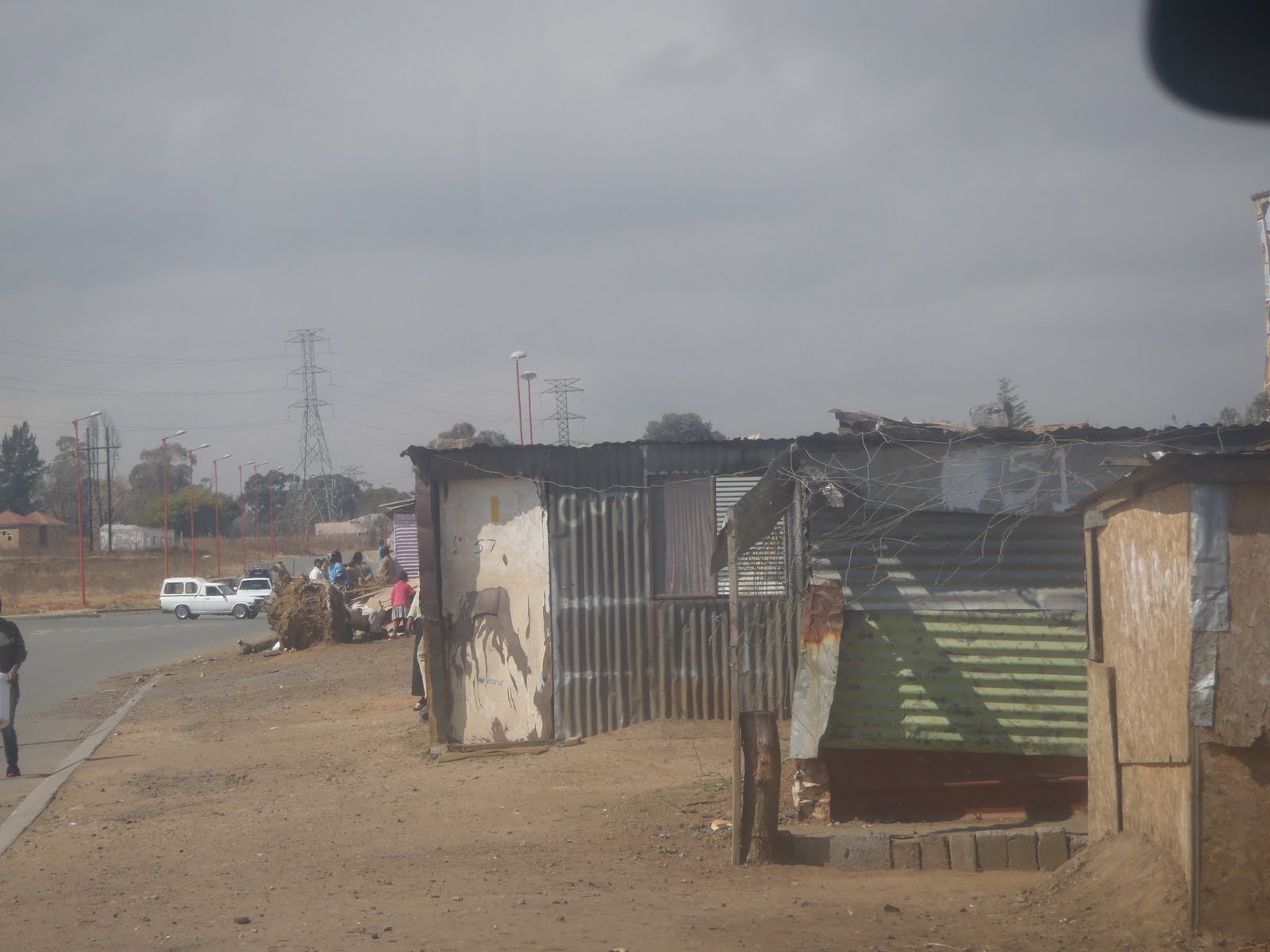
Like I've said before, my preconceived idea of the townships were a bunch of tin houses stacked on top of each other, and hard-done-by people in the streets. I pictured a falling down, miserable place.
I'm happy to say that Soweto has proven me wrong.

I'm not saying that life in Soweto is a cake walk. Every day, those people face hardships that I can't even comprehend. Food and water shortages, HIV/AIDS, little government funding and unsanitary conditions are just a few. Still, I was absolutely blown away by the smiles I saw coming from the Sowetan people. The children waved from the streets, the adults invited us into their homes, and the attitude was one of hope.

The tour of Soweto began at the Hector Pieterson Memorial and Museum. This museum is dedicated to the uprising among Sowetan schoolchildren in 1976. The students did not want to learn Afrikaans at school, and formed a protest. It began with marching and singing protest songs, but upon the arrival of the police forces, it erupted. Students threw rocks, and police shot guns. The first casualty was a thirteen-year-old student named Hector Pieterson.

This small museum is laid out in a simple yet poignant way. Photographs and small blurbs about each event leading up to the riots line the walls upwards, until the top floor, which is dedicated to the aftermath. The footage shown around the museum is unbelievable. I had never even heard of the Soweto Uprising before arriving in South Africa, and it was incredible to see documentation of such a powerful event, as well as standing in the very spot where Hector Pieterson had died.

I admire the dignity and pride that the people of Soweto have maintained. From the museum to the streets of the township itself, past the former residence of Mandela to the current residence of Archbishop Tutu, the whole area had a vibrant, forward-moving feel, both through the developed streets, and the poorest of the poor.

Because many of the people in Soweto live in extreme poverty, they felt that they had nothing to lose by inviting us into their homes, and showing us how they lived. I thought about the walled-off homes in the suburbs compared to the openness and sense of community I felt in Soweto.

I liked Soweto better.
Not all of the houses in Soweto are the same. The "bank houses" are two bedroom houses, which people get when they are able to pay the bank for their homes. These houses, while small, and by no means luxurious, don't actually look so bad! The "matchbox houses" and "elephant houses" are smaller, but still have somewhat solid walls, doors and windows. The elephant houses have big, clay roofs, which is where the name comes from.

The slums (the District 9 houses) are a famous visual of Apartheid. These were the houses that we chose to visit. One of the women, accompanied by her three beautiful children, led us into her home with a big smile. The house was tiny - and that is an understatement. The tin roof and tin walls had gaps between them, the bed (only one) was shoved in one corner, a propane stove for heating and cooking was in the centre of the room, and there was a small desk in the other corner. That was it.

I can't believe that people all over the country are living like this. The people of Soweto showed no sign of bitterness or contempt. They seemed genuinely pleased that we were willing to step outside our comfort zone and into theirs to learn about their lifestyle. This really had an impact on me. I'm so glad I had the opportunity - privilege if you will - to get a glimpse of the life in the townships firsthand, and meet some of the amazing, beautiful people that live there.

On the way out of Orlando (in Soweto), we drove by two huge cooling towers, which had been painted with murals and converted into a bungee jump. Mthandeni offered to stop if anyone wanted to give it a go. Maybe next time.

Seeing Soweto, its history and its people was one of the biggest travel highlights of my life. If you are in South Africa, do not, I repeat DO NOT miss Soweto. It was surprising, heartbreaking, and hopeful all at once. Walking into a darker part of a country's lifestyle is essential to understanding another very different aspect of life.
Questions? Comments? Criticisms? I'd love to hear them all!
the-wanderingjew@hotmail.com
The Essential Johannesburg in One Day

Since I only have two days in Jo'burg before I head off to Kruger Park, I had a plan to jam-pack some of the main points of interest into my two day stay. The plan was to go to the Apartheid Museum on the first day, and visit Soweto on the second. Unfortunately, when I looked at the prices for each individual tour, I almost passed out. Fortunately, there was another option: do a city tour of Jo'burg, the Apartheid Museum and Soweto all in one day...for a fair bit cheaper. I was also lucky enough to meet Erika, another solo female traveller (it is a thing), and it was cheaper for two! So we signed up.
Our guide Mthandeni (say it five times fast) met us at 7:45am. He is easily one of the most amazing people I've met so far, with one of the most incredible stories. Originally from the KwaZulu-Natal province, he lives in the shacks in Soweto with a wife and two children. He told us that by next year, he will receive his government house, which is a major step up. I wish him the best!
After picking up two more people who were joining the tour, Mthandeni welcomed us all wholeheartedly to South Africa, and then explained about the Cradle of Humankind: the world's oldest human fossils were found in this area, and therefore humankind may well have originated around Jo'burg and Pretoria. He welcomed us home.
Before officially starting the tour, he told us about all of the different sights and places around Johannesburg, such as the original gold mine, the crocodile farm, and various different historical sites-turned tourist haunts. It was incredible how much he knew about the area and its surroundings! If you ever need to know anything about South Africa, ask this guy. He'll tell you.
The first stop on the tour was Rosebank, one of the wealthy suburbs of Johannesburg, just north of the City Centre. It was amazing to see these huge mansions surrounded by high walls, razor wire, electric fencing, and some of the abysmally large houses even had their own security guards! It was sad to see that the fear of the outside world was driving these people to hold themselves prisoner in their own homes.
After Rosebank, we drove by the house where Nelson Mandela now lives! For security reasons, we couldn't actually stop in front of the house. Shame we couldn't knock on the door and say hi.

Next, we headed to the Constitutional Court, where we learned that South Africa had eleven official languages, which were all represented on the front of the building. Mthandeni urged me to try to pronounce some words in Xhosa (the "clicking" language), and then gave me a six-out-of-ten score! I was very proud.
Since in African culture, issues used to be resolved under the shade of trees, the inside of the courthouse was designed to look as if it were underneath trees. It was a beautifully designed building, and I liked seeing all of the different cultures represented. Some of the walls were built from the old fort, which had been a prison for a while. The contrast of these bricks mixed with new walls represented the past and future of the nation.

After that, we headed to downtown Johannesburg! Mthandeni promised that he would offer superior protection, and explained that his left fist was the "hospital option", and the right fist was the "grave option" and any assailants could take their pick. I felt very safe.

Downtown Jo'burg is definitely not as vibrant and attractive as Cape Town. It's mostly big buildings and rather dirty streets. It has the look of a corporate city, and overall, it's a little beat. However, some of the side streets had a certain charm. We got to look into one of the older stores in the area, which sold hooves, dried skins and herbs to cure whatever ails you. It was very cool in a rather morbid sort of way.

Based on what I had seen in the media before I came, I had expected downtown Johannesburg to be terrifying, full of leering locals, and I wondered if a bullet-proof vest would be a requirement. Maybe it was simply because I was on a guided tour, but I really didn't feel threatened or even sketched-out at all. Everyone I saw was just going about their business, and nobody seemed malicious or spiteful at all. I did notice that there weren't many white people out and about. It was interesting to be a part of a physical minority.

The last stop on the city tour was the "Top of Africa", located on the top floor of the Carlton Centre. You take an elevator up 50 floors, and get an amazing view of Johannesburg from all angles. It wasn't a part of the tour, but it only cost R20 (about $3) extra. Why not?

The next stop on the tour was the infamous Soweto. More on that later.

After Soweto, we headed to the Apartheid Museum. The museum starts out by issuing you a ticket, which randomly classifies you as "white" or "non-white".
For the record, "non-white" refers to any black, Indian, Asian, and mixed-race people.
The exhibit begins by giving a background on how Apartheid government came to be in the 1930s and 1940s. The (white) government wanted to give poor Afrikaaners a chance to get work, and so they moved all of the non-white citizens to their own areas (townships), so that they would not "interfere".
The museum, set up like a giant maze, takes you through the beginning of Apartheid, life in the townships, resistance groups, and then more horrifying exhibits, such as life for non-whites during this time, torture and imprisonment. There are original signs hanging on the walls saying "Europeans only". To be honest, it wasn't all that different from Nazi Germany, was it?
I learned about the "passbook" that all non-white citizens had to present in order to leave the townships. If they failed to present this, they would be arrested. It's really no wonder that people acted desperately by mugging wealthy citizens and other desperate measures, contributing to Johannesburg's high crime rate.
Many white families had black "servants" who would cook, clean and look after the children. Of course, the servants were not allowed to "love" the children...just take care of them objectively, as if that was possible.
Many activists, such as Mandela, Robert Sobukwe, and Steve Biko were tortured via electric shocks and beaten, and thrown into prison for resisting the Apartheid government.

The uprising in Soweto was a turning point in politics. Many non-white citizens, from schoolchildren to adults, rallied together against oppression. Many of them were killed or injured in conflict with police.
The museum shows a twenty-minute film, which shows footage from actual political rallies, and interviews with people who were involved. It was incredible to see such passion and violence. This twenty-minute documentary really brought to life what had been happening in a gripping, disturbing, evocative way.
The Apartheid Museum effectively conveys its message; it's hard to take all of the information given in the museum. It shows that Apartheid was not only unjust and full of hardship, but evil. Multimedia, written words and photographic presentations of this time - not very long ago - really paint a saddening, eye-opening, yet hopeful picture. I feel that I understand much more about Apartheid and the people involved than I did before coming to South Africa.
The final display in the museum shows Mandela's release in 1990, and the 1994 election which changed the world. The exit of the museum is lined with words like "responsibility", "freedom" and "diversity", as well as a small, serene pool. What a trip. The ending really gives a strong message of hope about the country's future.
Though the effects of Apartheid are far from forgotten, the optimism of the people in the country is evident. Despite a horrible past, I have felt safe in the country. The locals are pleased that I'm interested in their culture and history, and I feel honoured that they have welcomed me, and willingly told their stories.
Sometimes compassion and understanding - "ubuntu" here - can make all the difference. Respect and love for others drives the future of any country, and the South Africans I've met have shown this more than anyone. I highly recommend the Apartheid Museum. It's hard to look at, but essential to our understanding of South Africa's history, and the history of many people and cultures all over the world.
To read about Soweto, check the most recent blog.

Questions? Comments? Criticisms? I'd love to hear them all!
the-wanderingjew@hotmail.com
Sunday, August 14, 2011
The Last Two Days in Cape Town
 Believe it or not, my time in Cape Town is nearly done. Tomorrow morning I'm heading to the airport to fly to Jo'burg for the next part of my trip. I can't believe that my week in the Mother City is over...I've grown pretty attached. I hate to pick favourites, but Cape Town is definitely up there, and it's going to be hard to leave.
Yesterday, the weather was still a little chilly, but it had stopped pouring, so I signed up for a trip to the Cape Point, which is the absolute south-westerly point of the African continent. The tour started at 8:30 in the morning, and continued on right until almost 6:00. The Peninsula is a big place!

Our first stop on the tour was going to be Hout Bay, whose main claim to fame is the seal colony. On the way out, we drove past the Twelve Apostles of Table Mountain, and past the Atlantic Ocean, where the wind was creating the biggest swells I've ever seen. I still can't believe how stunning the scenery all around Cape Town is. Every way you turn your head, there's a beautiful landscape, just waiting to be ooh-ed and aah-ed over.

Just before Hout Bay, the first stop, we drove by Camps Bay, which is one of the most expensive communities in South Africa. Shortly down the road, we passed a township. I'm not sure I'll ever completely get used to seeing massive wedding-cake houses next to tin shacks. It's a bizarre and upsetting contrast.
At Hout Bay, t was an extra R50 to take a 45-minute ferry tour to Duiker Island, but I decided to give it a go. Unfortunately, out of the harbour, the waves were putting on a Titanic-esque show, and we had to turn around. I'll be honest, I'm getting a little sick of boats. I was a little disappointed that we didn't see the seals on the island, but on the way into the harbour, there were a bunch of them lazing around on the docks, and two of them were halfheartedly fighting. This made up for it. At one point, a man on the dock was trying to shoo the seals away from his boat. I was really hoping one of them would chase him down. No dice.

After Hout Bay, we drove past Chapman's Peak, where we stopped a few times for photo-ops. Chapman's Peak looks down over the ocean and the Cape of Storms. I learned that over 1, 000 shipwrecks had occurred on this coast (hence the name).
The next stop was definitely a highlight: Simon's Town, a cute little Navy base-turned seaside village. It had a lovely, relaxed atmosphere, frequent whale sightings...and it's also five minutes away from Boulders Beach, home of the infamous Jackass Penguins!

The penguins were definitely one of the high points of the tour. There were tons of them just hanging out on the beach, lying in the bushes, and a few of them running down the shore! The water washing over the boulders was stunning, and I couldn't help thinking that they had scoped out one of the best places to live. They're quite small, and very tempting to pet, although the signs warning of being bitten made me reconsider.


After the penguins, we drove into the Cape of Good Hope Nature Reserve, and were given the option of riding seven kilometres to the visitors' centre for a picnic lunch. Everyone took advantage of the biking option. Although the ride was mostly flat, the strong, freezing headwind and spitting rain made the few uphills quite hard, and the visibility wasn't great. I rode into the visitors' centre rather stiff, but soon forgot at the sight of the lunch. There was awesome bread, vegetables, pasta salad, juice...should I go on?

Then, it was the moment I had been waiting for: another seven kilometre ride to the Cape of Good Hope itself! It had stopped raining, and this ride didn't seem so intense. On the way in, we rode right by a family of baboons and two ostriches right on the beach! I arrived at the Cape of Good Hope by bicycle! I didn't see that one coming.

The Cape of Good Hope is easily one of the most beautiful locations I've seen on my trip. The waves were gigantic, and the ocean looked like a giant washing machine. This is the point where the Indian and Atlantic Oceans meet. There were boulders, and the sites of past shipwrecks all over, and of course, the famous "Cape of Good Hope" sign. I, of course, did the typical tourist thing and got my picture taken...holding a Canadian flag no less!

The next destination was the Cape Point, with the old and new lighthouses. We took a twenty minute walk up to the lookout - which took the cake for best view of the Peninsula - and then loaded back in the van to head back to Cape Town. It was definitely a long trip, but I feel like I learned quite a bit about the area, and saw some of the most famous and incredible sights in the world. Props to our guide Neil, who was like a walking, joking textbook on Cape Town! If you're ever in Cape Town and want to see the Peninsula, go through Daytrippers. I definitely got my money's worth!

Today, the weather had turned right around, and once again, there were clear skies. This meant only one thing: I was going to hike Table Mountain! For the past few days, the weather has been rather unforgiving, and I was worried that I wouldn't be able to hike the mountain. If there's major cloud cover, there's no point in going to the top, because there are no views. I also had yet to meet a single other person who was interested in the hike. Since I had heard stories about muggings at the base of the mountain, and - worse - people getting lost or dying due to treacherous conditions, I didn't think going alone would be the world's best idea.
I made an enquiry about a hike through Abseil Africa on Monday. Unfortunately, they needed at least two people to confirm the hike. It wasn't looking good. Luckily for me, Lenore, who works in the office there, had my back. She referred me to another guide, who was willing to take me up the mountain! She really went out of her way to make this happen for me, and I am so grateful!
This morning, at 8:30 (I'm sensing a theme), I was picked up, and we were off! I learned that the Cable Car was closed today, due to winds over 30 km/h. This meant that whether I liked it or not, we were hiking up and down. Fine by me!

The route we took was via Platteklip Gorge. I was fully expecting this hike to be Grouse Grind-esque, with lots of high-stepping and holding onto ropes and whatnot. It was definitely not a walk in the park by any means. The whole way up, you have to maneuver your way over big sandstone rocks, like a naturally-placed staircase. However, despite the careful-footing and extremely steep route, it didn't actually seem too terrible. The worst part for me was the wind; there were a few moments where I was sure I was going to be blown off the mountain, all the way to Robben Island. My hands were absolutely frozen, but after a good hour and a half of climbing, we made it!
The "Tablecloth" (cloud cover that often sits on top of the mountain) didn't appear today because of the wind, and the views from the top were spectacular. I had a perfect bird's-eye view of the City Bowl, Camps Bay, Clifton Beach, Hout Bay, and even a fair ways down the Peninsula! Although the wind was brutal, and therefore I didn't spend too long on the top, I was blown away (har har) by the views. I'm so, so glad Binny was willing to do the hike, because it really made my trip! Considering the obstacles in the weather and finding willing participants to hike, I consider myself very lucky that I got to do this on my last day in this amazing city.

Surprisingly, I found going back down the mountain harder than hiking up. Because of the gale-force winds and all the rocks, you had to pay very close attention to each footfall, and each stone step is far enough apart that it's quite a step down, and this was not a place I wanted to take a fall! My knees and hips were a little sore at the end, and my hands were pretty much petrified. Would I ever do it again? Absolutely.
I was very proud of myself for hiking up and back again. From now on, whenever I think of Table Mountain, I'll remember that I was on the top of the table! I also learned that the wind is the main reason the city isn't covered in pollution. They call it the "Cape Doctor".

I'd recommend this hike to anyone! There's a huge sense of fulfillment when you reach the top, and apparently it's not always so windy. Also, I saw a man hiking in bare feet, a bunch of teenagers in Keds, and a woman in a skirt and dress shoes hoofing it to the top. So if they can do it...
For the record, as excited as I am for the rest of my trip, I'm now feeling very bummed out about leaving this city. Cape Town, I love you!

Questions? Comments? Criticisms? I'd love to hear them all!
the-wanderingjew@hotmail.com
Subscribe to:
Posts (Atom)
